
Testosterone Replacement Therapy (TRT) for Men and Women
Park Private Practice
Do you often feel tired, lacking in motivation, or feel that your performance and overall well-being have declined? An imbalanced testosterone level may be one possible cause in both men and women.
At our private practice, our focus is on treatment with oral bioidentical testosterone, supplemented by conventional testosterone replacement therapies such as high-dose testosterone gel or esterified testosterone when medically indicated.

Welcome
Private Practice for Testosterone Replacement Therapy
Testosterone plays a central role in energy, physical performance, metabolism, and quality of life – in men as well as in women. Declining or persistently low testosterone levels can manifest themselves through fatigue, lack of motivation, reduced performance, or a diminished enjoyment of life.
Our goal is to help you regain greater energy, clarity, and quality of life through testosterone replacement therapy – with a treatment approach that is as individual as you are.
In addition to conventional TRT with esterified testosterone administered by injection, we also offer high-dose testosterone in gel form as well as oral bioidentical testosterone. The latter is particularly characterized by its simple administration in capsule form, high practicality for everyday use, and flexible adjustability of the therapy.
Which treatment is best suited to you will be determined individually following comprehensive diagnostics and an evaluation of your laboratory results, symptoms, and personal goals. We would be pleased to arrange a consultation at our private practice in Duisburg or via video consultation from anywhere in Germany, so that we can discuss your path toward greater well-being and vitality together.

What Is TRT?
TRT (testosterone replacement therapy) is a medical treatment in which testosterone is administered from an external source to compensate for a clinically relevant deficiency of the body’s own hormone. The aim is to restore testosterone levels to an optimal range and thereby improve typical symptoms such as fatigue, loss of libido, or reduced performance.
Conventional TRT is only carried out when both appropriate symptoms and repeatedly low blood testosterone levels are present. Depending on the form of treatment, testosterone may be administered as a gel, injection, or, in certain cases, orally. Careful diagnostic assessment before starting treatment and regular medical monitoring throughout the therapy are essential, as TRT is a medical treatment requiring a clear indication.
Indications
When Is Testosterone Replacement Therapy Appropriate?

For Men & Women
For Men
For Women

Symptoms
How Testosterone Deficiency Can Manifest Itself
These symptoms can also have many other causes (e.g., thyroid disorders, stress, lack of sleep, iron deficiency, or depression). Therefore, medical evaluation, including appropriate blood tests, should always be carried out. At our practice, we therefore place particular emphasis on comprehensive laboratory diagnostics in order to assess your hormonal status reliably and individually.
Your Benefits
What Are the Benefits of TRT?
More Energy and Less Fatigue
A TRT may help reduce persistent exhaustion and increase overall energy levels in everyday life. Many people report feeling more resilient, active, and capable in their daily lives.
Increased Libido and Sexual Function
Testosterone plays an important role in sexual desire and function in both men and women. Correcting a deficiency may help improve libido and sexual satisfaction.
More Strength and Muscle Mass
Testosterone supports muscle growth as well as the maintenance of muscle tissue. This can help improve strength and physical performance in everyday life.
Improved Body Composition
TRT may have a positive effect on metabolism and help support the maintenance of muscle mass. At the same time, it may contribute to more favorable changes in body fat distribution.
More Stable Mood and Increased Motivation
A balanced hormone level may have a positive effect on mood, motivation, and emotional stability. This may help reduce lack of motivation and depressive moods.
Greater Mental Clarity and Resilience
Many patients report improved concentration and less “brain fog.” Stress resilience and recovery may also improve.
Diagnosis and Treatment
How Does Testosterone Replacement Therapy (TRT) Work?
Book a Consultation
First, schedule an appointment – either conveniently via online video consultation or in person at our practice in Duisburg. During this initial consultation, we will discuss your symptoms, goals, and individual situation in detail and provide an initial medical assessment.
Laboratory Analysis
The next step is a comprehensive blood test, which can be carried out either at our practice or through your family doctor or another physician of your choice. In particular, total testosterone, free testosterone, SHBG, LH, and FSH are measured, as well as prolactin, estradiol, and other relevant metabolic and blood parameters where appropriate. This provides a sound basis for the diagnostic assessment.
Diagnosis
Based on your laboratory results and symptoms, we conduct a comprehensive medical evaluation. This includes determining whether testosterone deficiency is present, how pronounced it is, and which potential causes may need to be considered.
Starting Treatment
The next step is to determine which form of TRT is best suited to your individual situation, such as gel, injections, or oral bioidentical testosterone therapy. The treatment is then individually planned, initiated, and regularly monitored and adjusted as needed.
Oral bioidentical testosterone therapy offers a highly flexible treatment option in this context. Since it is taken daily, the dosage can be adjusted precisely and, if necessary, the treatment can be paused or discontinued relatively easily. This innovative form of treatment enables targeted hormonal support without suppressing the body’s own testosterone production to the same extent as conventional depot-based therapies.
A major advantage is that the so-called endogenous hormonal axis remains largely preserved. This is particularly important for patients who wish to protect their fertility, avoid testicular atrophy (shrinkage of the testicles), and maintain maximum flexibility. These characteristics make the treatment highly controllable and allow it to be adapted to individual life plans.
Testosterone Replacement Therapy (TRT) Options at a Glance
TRT Options
Oral Bioidentical Testosterone Therapy
This form of testosterone therapy is taken in capsule form and represents a particularly simple and modern treatment option. No injections or daily skin applications are required, making this therapy easy to integrate into everyday life.
One major advantage is its high degree of flexibility: the dosage can be individually adjusted, and the treatment can be changed or paused quickly if necessary. This allows the therapy to be adapted precisely to treatment progress, laboratory values, and how you feel. Many patients find this form particularly straightforward and convenient, as it does not require invasive procedures.


High-Dose Testosterone Gel
With this form of therapy, testosterone is applied to the skin daily, usually in the morning on the shoulders, arms, or abdomen. The active ingredient is then absorbed through the skin and enters the bloodstream. This produces a declining daily hormone profile that most closely resembles the body’s natural testosterone pattern.
The advantage of this method is that it is non-invasive and does not require injections. It is also relatively easy to control because it is applied daily and the dosage can be adjusted. However, it requires a consistent daily routine, as reliable effects depend on regular application. Care must also be taken to avoid direct skin contact with other people for a certain period after application.
Conventional Testosterone Injections
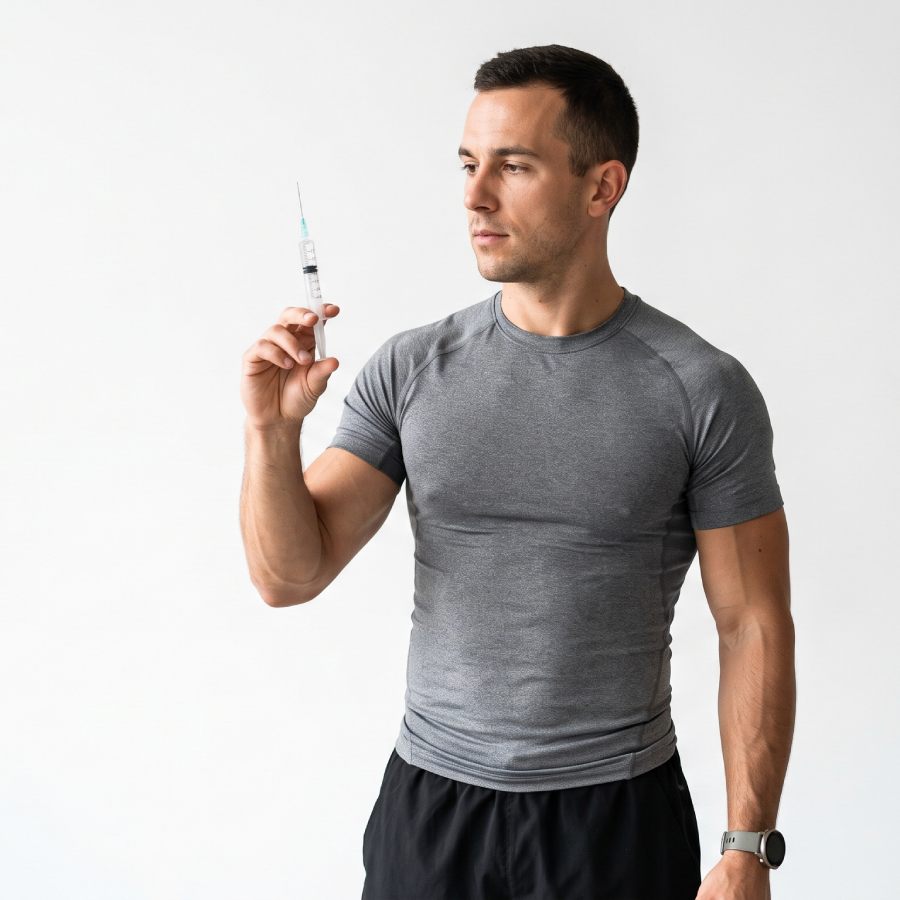
With this form of therapy, esterified testosterone is injected directly into the muscle at regular intervals, for example every 1 to 12 weeks, depending on the preparation. The hormone is then slowly released from the depot, providing a longer-lasting effect.
One advantage of this method is that it is highly effective and long-lasting and does not require daily application. This makes it relatively convenient in everyday life. However, the treatment is less flexible because dosage changes or discontinuation do not take effect immediately but occur with a delay due to the depot effect. Hormone levels may also fluctuate between injections, which some patients may notice. In addition, the treatment is invasive because it is administered by injection.
Oral Bioidentical Testosterone (in Oil/Capsule) |
Testosterone Injection (e.g. Enanthate, Undecanoate) |
Transdermal Testosterone Gel |
|
|---|---|---|---|
Administration |
Oral, daily, flexibly dosed |
Injection at fixed intervals (weeks–months) |
Daily application to the skin |
Pharmacokinetics |
Rapid increase in serum testosterone (approx. 1–3 h), individually variable |
Rapid to delayed increase depending on the ester; high peaks possible |
Slow, continuous absorption over several hours |
Controllability |
Very high: dosage, timing, and schedule can be readily adjusted; rapid changes possible |
Low: depot effect makes adjustments considerably less immediate |
Moderate: daily adjustment possible, but with limited dynamics |
Hormonal Axis (LH/FSH) |
Clinical response is variable; effects depend on dosage, timing, and individual regulation |
Frequently significant and sustained suppression of the gonadal axis during treatment |
Moderate, dose-dependent suppression possible |
Hormone Levels |
Highly individual, with short-term peaks also possible |
Typically high peaks and pronounced fluctuations between injections |
Relatively stable, low to moderate levels |
Discontinuation |
Highly flexible, no depot effect |
Delayed due to the depot effect |
Relatively rapidly reversible after discontinuation |
Practical Aspects |
Discreet, non-invasive, highly suitable for everyday use |
Invasive, but infrequent administration |
Non-invasive, but requires a daily routine |
Oral bioidentical testosterone therapy is the most individualized form of treatment. Since it is not available as a conventional finished pharmaceutical product and is individually dosed, it is at the higher end of the price range. Monthly costs are approximately €260 to €700, depending on dosage and treatment requirements.
High-dose testosterone gel (10–20%) is a well-established transdermal treatment. It is applied to the skin daily, with costs of approximately €260 per month for 10% gel and approximately €340 per month for 20% gel, depending on the concentration.
Conventional therapy with esterified testosterone (injections) is the most cost-effective option. Costs are approximately €160 per month, depending on the preparation and prescription.
While injectable therapy is the least expensive option, transdermal and oral therapies in particular offer advantages in terms of individual adjustability, flexibility, and ease of use, which is reflected accordingly in their cost.
Common Potential Side Effects of Testosterone Replacement Therapy (TRT)
Testosterone replacement therapy (TRT), like any hormone treatment, can cause side effects. These depend significantly on the dosage, individual sensitivity, and form of treatment (gel, injection, or oral). In both men and women, changes may occur particularly when hormone levels are set too high or the body is especially sensitive to the treatment.
Regular monitoring is therefore important to ensure that the therapy remains safe and appropriately adjusted. Overall, however, most side effects can be managed effectively when treatment is medically supervised and regularly monitored.
FAQ